Mesothelioma of the abdomen is called peritoneal mesothelioma. The serous membrane surrounding the abdomen is known as the peritoneum. This disease accounts for approximately 10% to 20% of mesothelioma cases. In addition, a rare form of peritoneal mesothelioma affects the male testicles. The covering layer of the scrotum is actually an outpouching of the peritoneum. Peritoneal mesothelioma is due to the ingestion of fibrous materials, including asbestos. Learn more about peritoneal mesothelioma.
Sunday, August 16, 2009
Type 2, Pericardial Mesothelioma
The rarest form of mesothelioma is that which affects the linings of the heart cavity, called the pericardium. Less than 10% of all mesothelioma cases are related to the heart. As in the lung, the rapid growth of the cancerous tumors can cause expansion of the tissue and accumulation of fluid. The fluid can interfere with the functioning of the heart and cause chest pain. Mesothelioma cases are known to be caused by exposure to asbestos; but it is completely unknown how the asbestos fibers enter the tissue layers surrounding the heart. Learn more about pericardial mesothelioma.
Type 1, Pleural Mesothelioma
Pleural mesothelioma represents about 75% of all mesotheliomas. The disease can grow quickly and enlarge the pleural space, causing it to fill with fluid. This fluid leads to the discomfort or pain associated with first detection of the disease. It is thought that pleural mesothelioma is caused by the inhaling of fibrous materials, including asbestos. These fibers lodge in the pleura and, over time, cause damage to the tissue layer and cancer erupts. Learn more about pleural mesothelioma.
Types of Mesothelioma
Mesothelioma cancer affects the serous membranes that surround the major organs in the midsection of the body. Different organs can be affected by mesothelioma because the serous membranes surround the lungs, heart, abdomen and others. The most common type of mesothelioma is that which affects the lung lining, and is called pleural mesothelioma. Other types are pericardial mesothelioma, which affects the lining of the heart, and peritoneal mesothelioma, affecting the lining of the abdomen.
Mesothelioma, contrary to what many people think, is not a type of primary lung cancer. That is, mesothelioma does not originate in the lungs, but as described above, it starts in the serous membranes or lining around the lungs (or other organs). However, mesothelioma can spread to the lungs and when this occurs, it is considered to be a secondary lung cancer. Mesothelioma is also commonly referred to as an asbestos lung cancer. Technically, this is also incorrect, since mesothelioma does not originate in the lungs. Asbestosis is a type of asbestos lung disease that is often confused with mesothelioma.
Thursday, August 13, 2009
Is Palliative Treatment an Option?
In some circumstances, age, contributing health problems, or advanced disease may make aggressive treatment impossible. In these cases, palliative care (that which treats the symptoms, but not the disease itself) may be appropriate. If you opt for palliative care, it is doubly important to communicate fully with your doctor. Many symptoms of mesothelioma can be alleviated or substantially lessened if you are completely open with your doctor. Each time you have an appointment, tell your doctor how you feel, what discomfort you are experiencing, and your level of pain. A good doctor should be willing to address your questions and concerns
What Treatment Options Will I Be Offered?
Treatment options may vary according to the age and over-all health of the patient, and the extent of the disease. It is important to be informed of all available options for your particular case, so that you can make decision on the option you feel most comfortable with. Surgery, chemotherapy, and clinical trials, as well as new approaches such as photodynamic therapy, immunotherapy, and gene therapy may be offered. Speak openly with your doctor regarding suggested procedures. Questions may include:
Why is this procedure best for me?
What does the procedure entail?
What are the advantages/disadvantages of this treatment (i.e, will this procedure limit my eligibility for other treatments)?
What are the possible risks or adverse side effects?
What are the response, survival, and mortality rates associated with this procedure?
Can I Be Treated by the Doctor Who Diagnosed My Mesothelioma?
If the doctor who diagnosed your mesothelioma is your primary physician, he will most likely refer you to a local oncologist for treatment. The oncologist may offer what he or she feels are the best treatment options, or, if their knowledge of this disease is limited, may suggest you seek out a doctor who specializes in mesothelioma. Most often these physicians are located at larger, teaching hospitals such as those listed in the Comprehensive Cancer Center Section. These facilities are ranked as state-of-the-art cancer centers, and are highly respected for their patient care and innovative cancer treatments. If your choice of treatment involves a radical surgical procedure or a clinical trial involving new, as yet unproven drugs, these facilities may be best for you. If your treatment involves an already-approved, standard form of chemotherapy, this can be carried out locally.
MESOTHELIOMA STAGES
Treatment options are often determined by the stage of mesothelioma a patient is in. There are three staging systems currently in use for pleural mesothelioma and each one measures somewhat different variables; peritoneal mesothelioma is not staged.
Staging is the term used to describe the extent of a patient's cancer, based on the primary tumor and its spread in the body. It can help the medical team plan treatment, estimate prognosis and identify clinical trials for which the patient may be eligible.
Staging is based on a knowledge of how the cancer develops, from the primary tumor, to the invasion of nearby organs and tissues, to distant spread or metastasis. Staging systems have evolved over time, and they continue to change as scientists learn more about cancer. Some staging systems cover many different types of cancer, while others focus on more specific cancers. The TNM (primary tumor, regional lymph nodes, distant metastasis) is the most common staging system for mesothelioma.
Some elements common to most staging systems are:
Location of the primary tumor.
Size and number of the tumors.
Lymph node involvement.
Cell type and tumor grade.
Metastasis.
Many cancer registries, such as the National Cancer Institute's Surveillance, Epidemiology, and End Results Program (SEER) use summary staging, a system used for all types of cancer. Summary staging groups cancer into five main categories:
In situ - cancer that is present only in the layer of cells in which it began.
Localized - cancer that is limited to the organ in which it began with no evidence of spread.
Regional - cancer that has spread from the primary site to nearby lymph nodes or organs.
Distant - cancer that has spread from the primary site to distant lymph nodes or organs.
Unknown - cases where not enough information exists to indicate stage.
Several types of testing may be used to help doctors determine stage, and to formulate a treatment plan.
Physical examinations. The doctor examines the body by looking, feeling and listening to anything out of the ordinary.
Imaging techniques. Procedures such as x-rays, CT scans, MRIs and PET scans may show the location, size of the tumor and whether the cancer has spread.
Laboratory tests. Studies of blood, urine, fluid and tissue can provide information about the cancer. Tumor markers, sometime elevated when cancer is present, may provide information.
Pathology reports. Results of the examination of tissue samples can include information about the size of the tumor(s), extension into adjacent structures, type of cells and grade of the tumor. Results of the examination of cells in fluid, such as that from a mesothelioma-related pleural effusion, may also provide information.
Surgical reports. Observations about the size and appearance of the tumor(s), lymph nodes and nearby organs.
Staging information should be provided to the patient by his doctor so that potential treatment plans can be discussed. Stage of the mesothelioma, as well as consideration of other factors such as age, health status and the patient's wishes may dictate different treatment options.
The oldest staging system and the one most often used is the Butchart System which is based mainly on the extent of primary tumor mass and divides mesotheliomas into four stages. The more recent TNM system considers variables of tumor in mass and spread, lymph node involvement, and metastasis. The Brigham System is the latest system and stages mesothelioma according to resectability (the ability to surgically remove) and lymph node involvement.
Butchart System – extent of primary tumor mass
Stage I: Mesothelioma is present in the right or left pleura and may also involve the diaphragm on the same side.
Stage II: Mesothelioma invades the chest wall or involves the esophagus, heart, or pleura on both sides. Lymph nodes in the chest may also be involved.
Stage III: Mesothelioma has penetrated through the diaphragm into the lining of the abdominal cavity or peritoneum. Lymph nodes beyond those in the chest may also be involved.
Stage IV: There is evidence of metastasis or spread through the bloodstream to other organs.
TNM System -- variables of T (tumor), N (lymph nodes), M (metastasis)
Stage I: Mesothelioma involves right or left pleura and may also have spread to the lung, pericardium, or diaphragm on the same side. Lymph nodes are not involved.
Stage II: Mesothelioma has spread from the pleura on one side to nearby lymph nodes next to the lung on the same side. It may also have spread into the lung, pericardium, or diaphragm on the same side.
Stage III: Mesothelioma is now in the chest wall, muscle, ribs, heart, esophagus, or other organs in the chest on the same side with or without spread to lymph nodes on the same side as the primary tumor.
Stage IV: Mesothelioma has spread into the lymph nodes in the chest on the side opposite the primary tumor, or extends to the pleura or lung on the opposite side, or directly extends into organs in the abdominal cavity or neck. Any distant metastases is included in this stage.
Brigham System: (variables of tumor resectability and nodal status)
Stage I: Resectable mesothelioma and no lymph node involvement
Stage II: Resectable mesothelioma but with lymph node involvement
Stage III: Unresectable mesothelioma extending into chest wall, heart, or through diaphragm, peritoneum; with or without extrathoracic lymph node involvement
Stage IV: Distant metastatic disease
What Is My Diagnosis?
There are three types of mesothelioma. Pleural mesothelioma is a cancer of the lining of the lung (pleura), peritoneal mesothelioma is a cancer of the lining of the abdominal cavity (peritoneum), and pericardial mesothelioma is a cancer of the lining surrounding the heart (pericardium). Sub-types (or cell types) of mesothelioma are epithelioid (the most common, and considered the most amenable to treatment), sarcomatous (a much more aggressive form), and biphasic or mixed (a combination of both of the other cell types).
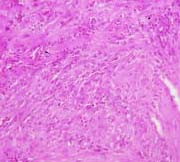
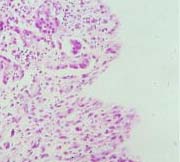
The structural appearance of cells under the microscope determine the cell or sub-type of mesothelioma. Epithelioid is the least aggressive; sarcomatoid, the most aggressive. The biphasic or mixed cell type shows structural elements of both of the other two. More on the histologic subtypes of mesothelioma.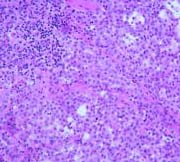
Epithelioid mesothelioma tissue Sarcomatoid mesothelioma tissue
Biphasic mesothelioma tissue
Subscribe to:
Comments (Atom)