Friday, July 10, 2009

Peritoneal Mesothelioma


Peritoneal Mesothelioma is the second-most prevalent form of asbestos-related cancer, rarer than the pleural variety, and accounting for about 10% - 15% of all diagnosed Mesothelioma cases. This form of cancer affects the lining of the abdomen, known as the peritoneum.
Doctors and researchers offer two theories as to how asbestos fibers are able to enter the peritoneum. Some believe that the fibers are caught and held by the mucus in the trachea or bronchi and ultimately swallowed. The second explanation notes that fibers lodged in the lungs may move into the lymphatic system and be transferred to the peritoneum.
Regardless of which explanation is correct, peritoneal Mesothelioma can be quite difficult to detect, as the cancer may lay dormant for many years. Like all types of asbestos-related cancers, documented incidences show that this type has, at times, been dormant for up to four decades. That, of course, makes it all the more difficult to treat this disease because, by the time it’s detected, it has reached its advanced stages.
The symptoms of peritoneal Mesothelioma are non-specific and can often be mistaken as indicators of a much less serious disease. Therefore, it’s important to let medical professionals know that the patient has been exposed to asbestos in the past. Symptoms of this type of Mesothelioma might include:
Abdominal pain
Abdominal swelling due to fluid accumulation
Weight loss


Loss of appetite
Weakness
Nausea
Bowel obstruction
Breathing difficulties
Location of the tumor will determine which symptoms are present and/or most severe and symptoms may be different according to the patient’s general health and age.
Often, the diagnosis of peritoneal Mesothelioma is accidental, perhaps discovered during an x-ray for another ailment. Additional x-rays, CT scans, or MRIs may be ordered but, ultimately, a tissue biopsy will be the most conclusive test.
Once this type of Mesothelioma is diagnosed, treatment options will be discussed. While there is currently no cure for this disease, the patient can be treated in a variety of ways to help ease symptoms, reduce pain, and prolong life. Options include:
Surgery – the surgery performed for peritoneal Mesothelioma may involve cutting out part of the lining and tissue from the abdominal area in order to remove the tumor. If the tumor is particularly large, a lung or a section of the diaphragm may need to be removed as well. Because this type of cancer is so often diagnosed in its late stages, surgery may not be an option as the cancer has already spread too much by this point.
Chemotherapy – the use of intra-peritoneal chemotherapy is often recommended to patients with peritoneal Mesothelioma. This involves the infusion of chemotherapy drugs directly into the abdominal cavity. It can be used after surgery or on its own.
Radiation therapy – radiation may be targeted directly at cancer cells or can be used for palliative reasons such as to reduce pain or shortness of breath or to control the spread of the tumor.
Clinical trials – some patients choose to participate in clinical trials or employ the use of therapies that have not yet been deemed successful in treating the disease, such as gene therapy or immunotherapy.
Although peritoneal Mesothelioma is not the most prevalent form of asbestos-related cancer, it is indeed a serious problem and many people die each year from the disease. If you, a friend, or a loved one has been diagnosed with this or any other type of asbestos-related cancer, learn about your options and rights by ordering our free Mesothelioma Resource Kit, full of information on the disease, its treatments, and the legal options of an asbestos-related cancer victim

Article From Here

Pleural Mesothelioma

There are two types of Pleural Mesothelioma: Cancerous and non-cancerous.
Benign mesothelioma many times can be surgically removed and is generally not life threatening or a result of asbestos exposure. Malignant mesothelioma is very serious, though. The infliction is quite rare and less than three thousand people in the US get it each year.
The following section is about malignant pleural mesothelioma:
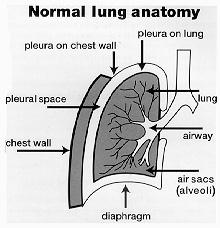
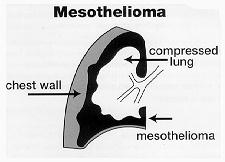
Pleural mesothelioma is a cancer of the cells that affects the skin or inner lining (known medically as the pleura) outside of the lungs and inside of the ribs. This is caused ONLY by exposure to asbestos fibers found in products made mostly by US corporations. The exposure could have occurred many, many years ago because it takes many years for the disease to show up. Pleural mesothelioma is the most common type of mesothelioma and chances are that if you have mesothelioma, this is the type you have.
Often Mesothelioma is diagnosed when no symptoms are present. This could be because a tumor is present or is randomly discovered through something like a routine exam. When these symptoms do occur, they can include shortness of breath, weight loss, chest pains, pains about the lower back, chronic cough, difficulty swallowing, and severe weakness. In the initial examination a medical examination will often show a pleural effusion, which is a bunch of fluid in the area between the lungs and the wall of the chest.

A chest x-ray or CT scan is the necessary first step in identifying mesothelioma, which is followed up with what is called a bronchoscopy. A bronchoscopy requires a viewing scope to look inside the lungs. The diagnosis itself requires a biopsy which allows the medical professionals to take a little piece of tissue from the area in question. This can be done using a tiny needle, an open cut, or even these days through a tube with a camera on the end of it. This is a procedure that must happen at the hospital, but it is not a painful procedure typically.
Any fluid build-up from the pleural effusion can generally be viewed via the x-ray and can be heard through the dr.’s stethoscope during examination. The only firm diagnosis of mesothelioma can be made through the biopsy described earlier. Because other things like tumors and benign effusions can look like mesothelioma, a biopsy is the only safe way to tell as a diagnosis of mesothelioma can be one of the most difficult in the book.
As the tumor spreads over the lining between the lungs and the chest, flexibility can be increasingly painful and restricted. Because of this, breathing becomes much more difficult. It begins with shortness of breath potentially while exercising but as function continues to drop short breath can become more and more of a persistent problem.
Although there is no cure for pleural mesothelioma, the treatment options have improved for managing symptoms. As with any cancer, the prognosis is better for those diagnosed early, and treatment can be more aggressive. Most pleural mesothelioma patients are treated with a multimodal therapy, or combination of treatment options. It is possible for patients with pleural mesothelioma to live for 5 to 10 years after diagnosis, although the average survival time is about a year.
Specific types of treatment include:
Chemotherapy and other drug-based therapies
Radiation therapy
Surgery
Intra-operative photodynamic therapy.
Experimental treatments such as gene therapy, angiogenesis inhibitors, immunotherapy, and many clinical trials are also in the development stages.
Although mesothelioma remains uncurable, many other treatments have had success in pain reduction and improving lung function. Surgeries to remove tumors and reduce pressure have shown promise in pain reduction, and pain control medications are constantly improving. In some cases, X-ray therapy has been shown to control tumor pain as well

Article From Here

What is Mesothelioma

Mesothelioma is a serious and rare form of lung cancer. It is most frequently seen in men between the ages of 50 to 70. Women are affected far less frequently. In the US, between 2000 and 3000 cases are diagnosed each year. Estimates suggest that the incidence of mesothelioma for every 100,000 in the US is about 1.8 and 0.9 internationally. This form of cancer affects people of every race equally. The number of people who have been diagnosed with mesothelioma has increased significantly in the past 30 years. Although many advances in treatment have been made, there is no cure for this type of cancer.

In mesothelioma, the cells of the mesothelium become cancerous and grow out of control. The mesothelium is a protective, two-layered membrane that covers the internal organs of the body including the lungs, heart and abdominal organs. Between these layers, the cells produce fluid, which allows easy movement of the heart and lungs within the chest cavity. The layer that covers the lungs is called the pleura, and the layer that covers the heart is called the pericardium. The peritoneum lines the abdominal cavity. Mesothelium also lines the male and female reproductive organs. Mesothelioma can affect any of these cells, but is usually seen in the pleural or peritoneal mesothelium. The most common form of mesothelioma is pleural.

The primary risk factor for developing mesothelioma is exposure to asbestos. Between 70-80% of people diagnosed with mesothelioma have been exposed to asbestos, usually in the workplace. Although it is possible to develop mesothelioma without any exposure to asbestos, it is very rare. While one person for every million people in the US will be diagnosed with mesothelioma, about 7-13 men who have been exposed to asbestos will be diagnosed with the disease. Symptoms frequently take 20 years to develop, but can take as long as 50 years to occur.

When cancerous cells invade the mesothelium, it becomes increasingly difficult to breathe. In the pleural form of mesothelioma, tumors growing in the mesothelium cause pleural effusions, which prevent the smooth movement of the lungs and other organs in the chest. Peritoneal mesothelioma invades the abdominal cavity and can cause loss of appetite weight loss, nausea and vomiting. Most patients seek medical care after having symptoms only 4-6 months.

Mesothelioma is a very aggressive form of cancer. Because it takes so long for symptoms to appear it can spread to the other organs in the chest, the chest wall and into the lymph nodes. The cancerous cells spread, or metastasize from the mesothelium into other parts of the body and damage internal tissues and organs. Treatment is more effective when the disease is detected early.

Treatment is aimed at reducing the size of tumors, and relieving symptoms. Chemotherapy, radiation treatment and surgery are some of the traditional treatment strategies used to help patients live longer, with fewer symptoms. New advances in photodynamic therapy and immunotherapy give hope for prolonging the lives of patients with mesothelioma. On average, however, the life expectancy after being diagnosed with mesothelioma is less than one year
Article From Here

Friday, July 3, 2009

Automobile Factory Workers Face an Increased Probability for Cancer

In Detroit and elsewhere, the high rate of cancer and other deadly illnesses in America's auto factory workers continues to be a growing concern.

A link between auto workers and cancer began gaining attention in the 1970s. During this time, asbestos-related cancers such as mesothelioma began cropping up in an unusual number of industry employees. The cause, as it turns out, is the extended amount of time that auto employees spent working around asbestos-laden brake pads and clutch plates.

Though asbestos regulation enacted in the 1970s and beyond have significantly limited the amount of asbestos exposure current auto workers are exposed to, the number of new mesothelioma cases continues to rise. This is because mesothelioma has a latency period of between 20 and 50 years. As such, retired auto workers who worked in plants prior to the 1980s are only now experiencing the deadly side effects of working among such hazardous materials.

Though asbestos is now regulated, it is not the only hazardous material found in our nation's auto factories. Hazards that are as old as the auto industry itself include paint vapors and solvents, welding fumes, foundry chemicals, die cast components and carcinogens released during patternmaking.

Since the 1980s, a number of studies have been released that correlate the above list of hazards to a growing number of potentially fatal illnesses. For auto workers specifically, the facts can most easily be summed up by a 1994 study titled "Cancer in the Auto Industry." In the study, the author lists a number of illnesses that can be linked to specific jobs in auto factories. These correlations include:

  • Assembly plant workers: Hodgkin's Disease and lung, lymphoma, stomach, pancreas and trachea cancer
  • Ball bearing production: pancreas and stomach cancers
  • Die casting & electro-plating: lympho-reticulo sarcomas and stomach cancers
  • Engine plants: liver and bladder conditions
  • Engine and foundry plants: stomach and prostrate cancers
  • Maintenance: pancreatic cancer
  • Mechanics/Repairmen: stomach, bladder, lymphopoietic and lung cancers
  • Millwrights: rectum and lung cancers
  • Patternmakers: colon, brain, colorectal and stomach cancers
  • Spray Painters: colon cancer
  • Tool and die makers: digestive and lymphopoetic cancers
  • Welders: lung, pancreas and stomach cancers

Article From Here

MESOTHELIOMA'S CAUSE - ASBESTOS EXPOSURE

At some point in our lives, nearly all of us have been exposed to asbestos in the air we breathe and the water we drink; from natural deposits in the earth, and from the deterioration of asbestos products around us. Most of us, however, do not become ill as a result of our exposure. More commonly, those who at some point are diagnosed with asbestos disease, have worked in jobs where more substantial exposure occurred over longer periods of time. Nevertheless, cases of mesothelioma have been documented as the result of lesser exposure, affecting family members of workers who came into contact with asbestos and brought it home on their clothing, skin or hair, or affecting those who lived in close proximity to asbestos manufacturing facilities. Symptoms of asbestos disease usually are not be apparent until decades after exposure.

Asbestos was used commercially in North America as early as the late 1800s, but its use increased dramatically during the World War II era when shipyards produced massive numbers of ships for the war effort. Since that time, asbestos-containing products were used by the construction and building trades, the automotive industry and the manufacturing industry. All told, more than 5,000 products contained asbestos.

For more than 50 years, products containing asbestos remained unregulated, and the manufacturers of those products continued to prosper, knowing full well that many of the millions of workers who came into contact with their products would ultimately suffer as the result of their actions. Finally, in the late 1970s, the Consumer Products Safety Commission banned the use of asbestos in wallboard patching compounds and artificial ash for gas fireplaces because the fiber could easily be released during use. In 1989, the Environmental Protection Agency banned all new use of asbestos, but uses established prior to that time were still allowed. Although awareness of the dangers of asbestos and public concern over the issue have led to a decline in domestic consumption over the years, a total ban on asbestos has not come to fruition. Asbestos is still imported, still used and still dangerous.

Although it is suggested that the number of mesothelioma cases in the U.S. has reached its peak and has begun to drop, a forecast released by the National Cancer Institute's Surveillance, Epidemiology, and End Results Program (SEER), in April, 2003, projected the total number of American male mesothelioma cases from 2003-2054 to be approximately 71,000. This number, however, does not take into consideration events such as the World Trade Center disaster on September 11, 2001, when millions of New Yorkers were potentially exposed to air filled with carcinogenic asbestos particles. The incidence of mesothelioma cases by state and county are shown in these tables. When the latency period for asbestos disease is factored in, cases of mesothelioma will continue to be diagnosed for years to come. See our page on mesothelioma risk factors.


Article From Here

Mesothelioma Common Questions

What is Mesothelioma? What is the difference between pleural mesothelioma and peritoneal mesothelioma?
Malignant mesothelioma is a disease in which a cancerous tumor grows on the mesothelium - the sac lining the internal body cavities. The specific type of mesothelioma is named for the tissue where the cancer started. Pleural mesothelioma starts in the chest, in the pleura that surrounds the lungs (outer lining of the lungs and internal chest wall). It makes up about 70% of mesothelioma cases. Peritoneal mesothelioma starts in the lining of the abdominal cavity.

Although sometimes referred to as "asbestos lung cancer", mesothelioma is not the same as lung cancer. Lung cancers occur inside the lung itself; mesothelioma occurs in the lining of the lung. Mesothelioma is rare, striking fewer than 3000 Americans per year.

How do you get malignant mesothelioma?
Mesothelioma is caused by asbestos exposure. Asbestos, once regarded as a miracle mineral, was popular due its lightweight but tough characteristics as well as for its heat-resistant properties. This naturally occurring mineral was used in many commercial and consumer products, from construction materials such as cement, roofing shingles and insulation, to consumer and industrial applications such as hair dryers, automobile brake pads and pipe insulation.


Most people with malignant mesothelioma worked on jobs where they breathed asbestos. Others were exposed to asbestos in a household environment, often without knowing it.

How much exposure does it take to get the disease? What is the latency period?
Very little exposure can result in mesothelioma. Sometimes people who worked with asbestos for as little as one or two months get mesothelioma. The "latency period" refers to the time between asbestos exposure and diagnosis of the disease. For mesothelioma, the latency period can be decades long, and people exposed in the 1940s, 50s, 60s, and 70s are now being diagnosed.

What are the symptoms of mesothelioma?
Our mesothelioma symptoms page goes into detail about the signs of this cancer. Please note that it is important to seek professional medical advice when trying to diagnose for mesothelioma. The major symptoms include:

•Shortness of breath caused by expanding pleural effusion
•Persistent dry cough
Other symptoms may include:

•Fatigue
•Night sweats
•Fever
•Pain under the rib cage
•Swelling or lumps in the abdomen
•Unexpected weight loss
How do doctors treat malignant mesothelioma?
Each patient has an individualized treatment plan which takes into account the type and stage of the cancer as well as the patient's overall health. Traditional mesothelioma treatments include surgery, chemotherapy, radiation or a combination of these. Contact us at 1-877-367-6376 if you want to talk about reviewing treatment options.

Is there any promising research or are there promising new drugs for mesothelioma?
Scientists and doctors are engaged in research at various cancer centers all over the United States. Researchers are constantly trying to develop new and more effective drugs as well as new treatment techniques. In the past few years, there have been several major advances in the management of mesothelioma, including more accurate staging, improvements in surgical techniques and postoperative care, new chemotherapy regimens, and new radiotherapy techniques such as intensity-modulated radiation therapy. Some of this research is being conducted through clinical trials, for which you may be eligible. Please call us if you need additional information on current trials.


What should I do if I think I've been exposed to asbestos but don't have mesothelioma?
You probably will not get this rare disease, but you should remain vigilant and get regular check-ups. Let your doctor know about your asbestos exposure.


I was exposed to asbestos when I was in the military. Could that be how I got mesothelioma?
The armed forces used asbestos extensively in the 20th Century, and because of the long latency period only now are many veterans getting mesothelioma. People were exposed in all branches of the service, in a variety of jobs. We have worked with veterans from all over the country. We can help you find VA resources and medical assistance. Our veterans section goes into more detail or feel free to call us at 1-877-367-6376.

Where can I find information on living with mesothelioma?
Mesothelioma Aid is a good website for resource for families dealing with mesothelioma. It includes advice and referrals to other resources for coping with cancer, caregiving, financial challenges, and support groups. Alternatively, contact us here at Mesothelioma Web for help finding resources for living with this disease.

What other resources are available for people with malignant mesothelioma?
Should you need more information or have additional questions, please contact us and we can refer you to sources that could answer your specific question. We can be reached at 1-877-367-6376.


Article From Here

Mesothelioma Lawsuits - Mesothelioma attorneys

Mesothelioma Lawsuits - Mesothelioma attorneys
1 Mesothelioma is a rare form of cancer Mesothelioma that can take up to 20 years Mesothelioma to develop, Mesothelioma attorneys need specific Mesothelioma training andMesothelioma experience when Mesothelioma seeking compensation for clients.
2 who works with or was Mesothelioma exposed to asbestos can prove that they have Mesothelioma suffered injuries Mesothelioma related to asbestos contamination. Mesothelioma attorneys Mesothelioma Mesothelioma

Mesothelioma

Mortgage mortgage rates from hundreds of mortgage companies. mortgage loan rate quotes for home loans. A mortgage loan is a loan secured by real property through the use of a note which evidences the existence of the loan and the encumbrance of that realty Mortgage.